
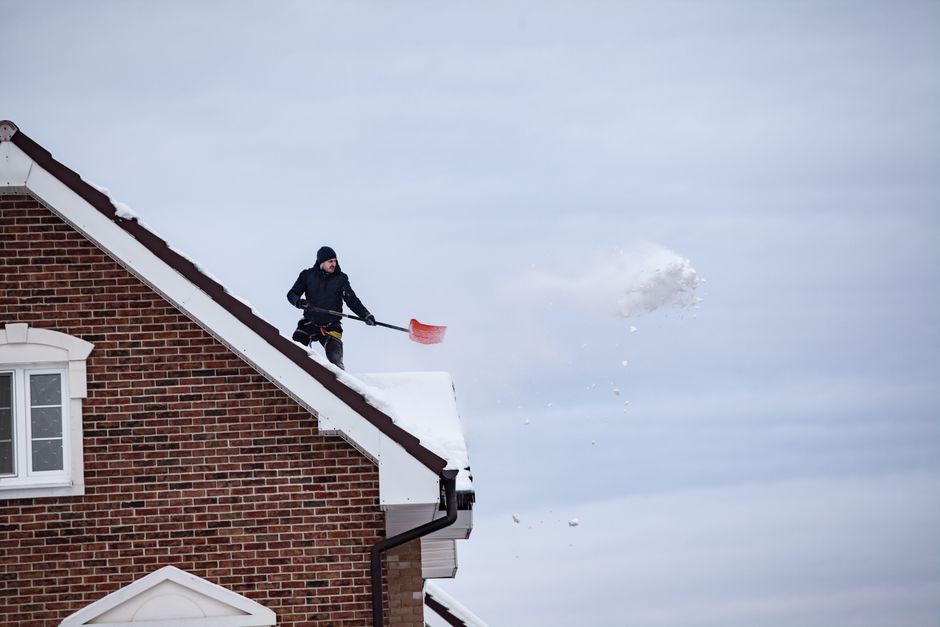
Roof debris can block gutters, hold moisture against shingles, hide damaged areas, and add unnecessary weight to a roof system. For households in Oxford, NY, routine debris removal is especially useful after autumn leaf fall, strong winds, freezing rain, and winter storms.
The safest approach is to remove light debris from the ground whenever possible and avoid walking on the roof unless proper fall-protection equipment and experience are available.
What counts as roof debris?
Roof debris includes more than leaves. Common examples are:
- Leaves, pine needles, and small twigs
- Broken branches and bark
- Windblown plastic, paper, or yard materials
- Accumulated moss or loose organic matter
- Small amounts of hail or storm residue
- Detached shingle pieces or flashing fragments
- Snow and ice, which require separate precautions
Debris often collects in roof valleys, behind chimneys, around plumbing vents, near skylights, and along gutter edges. These areas deserve attention because trapped material can slow drainage and keep roofing materials damp.
Can roof debris be removed without climbing onto the roof?
Yes. For light leaves and small twigs, removal from the ground is usually the safest option. A telescoping roof rake or soft-bristled extension tool can loosen material while the person remains on level ground.
Use a tool designed for roofs rather than a stiff garden rake. Metal tines and aggressive scraping can remove protective granules from asphalt shingles, scratch metal roofing, crack fragile roofing materials, or disturb flashing.
Work slowly from the edge of the roof. Avoid pulling hard on branches that are caught under shingles or around vents. If an object does not release easily, continued pulling may cause more damage than the debris itself.
A ladder may be useful for reaching lower gutter sections, but it should be placed on firm, level ground and kept clear of ice, wet leaves, and other slippery conditions. Do not stand on the top step or stretch sideways to reach around the roofline.
When is it unsafe to climb onto a roof?
A roof should not be treated as a safe walking surface simply because it appears dry. Asphalt shingles can become slippery from dew, frost, moss, algae, or fine granules. Metal roofing can be especially slick, and steep slopes increase the chance of a serious fall.
Avoid climbing when:
- The roof is wet, icy, frosted, or snow-covered
- Wind is strong enough to affect balance or move loose materials
- The roof has a steep pitch or multiple levels
- Shingles are curling, brittle, loose, or visibly damaged
- The roof deck feels soft or appears sagged
- Debris is near power lines, fragile skylights, or unsupported edges
- You lack a properly secured ladder and fall-protection system
Fall protection is not the same as wearing ordinary shoes or carrying a broom. A harness must be connected to a suitable anchor, and ladders, roof brackets, guardrails, and other equipment must be used correctly. Improvised tie-off points, unsecured ladders, and walking backward while dragging debris create serious hazards.
For many homeowners, ground-level removal and visual inspection from the yard are the appropriate limits of routine maintenance.
How should homeowners remove leaves and small branches?
Start by inspecting the roof from the ground. Look for piles in valleys, blocked gutters, hanging branches, and areas where water may be unable to drain.
For loose material within reach:
1. Move people, pets, vehicles, and outdoor furniture away from the drop zone.
2. Use a soft roof rake or extension tool from the ground.
3. Pull debris toward the roof edge rather than pushing it upward.
4. Keep debris away from doors, walkways, and foundation areas.
5. Collect the material rather than allowing it to settle in gutters or around downspouts.
6. Check the ground afterward for nails, broken shingle pieces, or sharp branches.
Do not use a leaf blower from a roof unless the equipment and conditions can be controlled safely. Blowing debris can send material into neighboring areas, onto roads, into attic vents, or toward people below. It can also force leaves beneath shingles and disturb loose roofing components.
Should moss, algae, and organic buildup be scraped off?
Heavy scraping is usually a poor choice. Moss can grow beneath shingle edges and hold moisture against the roof surface. Removing it aggressively may tear shingles or loosen their tabs.
Light surface growth may be addressed with a roof-safe cleaning method, but household bleach, pressure washing, and harsh tools can damage roofing, siding, plants, and metal components. Pressure washing is particularly risky because it can strip granules and drive water beneath shingles.
If organic growth is widespread, if the roof is fragile, or if roots appear embedded under shingles, the condition should be treated as a roofing problem rather than ordinary debris cleanup.
How should gutters and downspouts be handled?
Roof debris and gutter debris are closely related. Leaves that remain on the roof often wash into gutters during the next rainfall, creating a blockage farther down the drainage path.
After removing loose roof material, inspect:
- Gutter channels
- Gutter outlets
- Downspout openings
- Elbows and underground discharge points
- Areas where water drains beside the foundation
Use a hand scoop or gloved hand from a stable ladder position for accessible gutters. Do not lean the ladder against unsupported gutter edges, and do not reach beyond a comfortable working position.
Flush accessible downspouts with a controlled amount of water. If water backs up, exits at a joint, or fails to reach the discharge point, the system may need further attention. Clogged drainage can contribute to overflowing gutters, ice buildup, stained siding, basement moisture, and erosion near the foundation.
What about branches or storm debris?
Small branches can sometimes be removed from the ground with a pole tool, provided they are loose and away from electrical wiring. Larger limbs, embedded branches, and debris resting on damaged roofing should not be pulled down casually.
After a strong windstorm, look for:
- Missing or displaced shingles
- Exposed underlayment
- Bent flashing
- Cracked vent covers
- Punctures or holes
- Sagging roof areas
- Water stains in the attic or upper ceilings
Do not climb onto a roof to investigate suspected storm damage. A damaged roof may have weakened decking, concealed openings, or unstable materials. Keep people away from areas where debris could fall, and use temporary interior containers to catch active leaks if needed.
How often should roof debris be checked in Oxford?
A ground-level inspection in late fall and again after winter weather is practical for many homes. Additional checks are sensible after high winds, heavy rain, ice storms, or nearby tree damage.
Properties surrounded by mature trees may need more frequent attention than homes with open yards. Roof valleys, low-slope sections, porch roofs, and areas below overhanging limbs commonly collect debris first.
Routine removal should not involve scraping, pressure washing, or walking on the roof. The goal is to keep drainage paths open and identify visible problems before water enters the building or minor damage becomes more extensive.
When is outside help necessary?
Roof debris removal requires specialized equipment or trained assistance when the roof is steep, high, icy, heavily snow-covered, structurally damaged, or close to utility lines. The same applies to large limbs, thick ice, extensive moss, suspected asbestos-containing materials, or debris that cannot be reached without stepping onto the roof.
A homeowner can often manage a ground inspection and remove a few loose leaves safely. Conditions involving height, unstable surfaces, electrical hazards, or damaged roofing should be treated as hazardous work rather than ordinary household maintenance.
